Discover with
Encyclopedia
Explore an extensive collection of garments curated by the community, featuring tailored filters and distinctive viewpoints.
Discover with
Encyclopedia
Explore an extensive collection of garments curated by the community, featuring tailored filters and distinctive viewpoints.

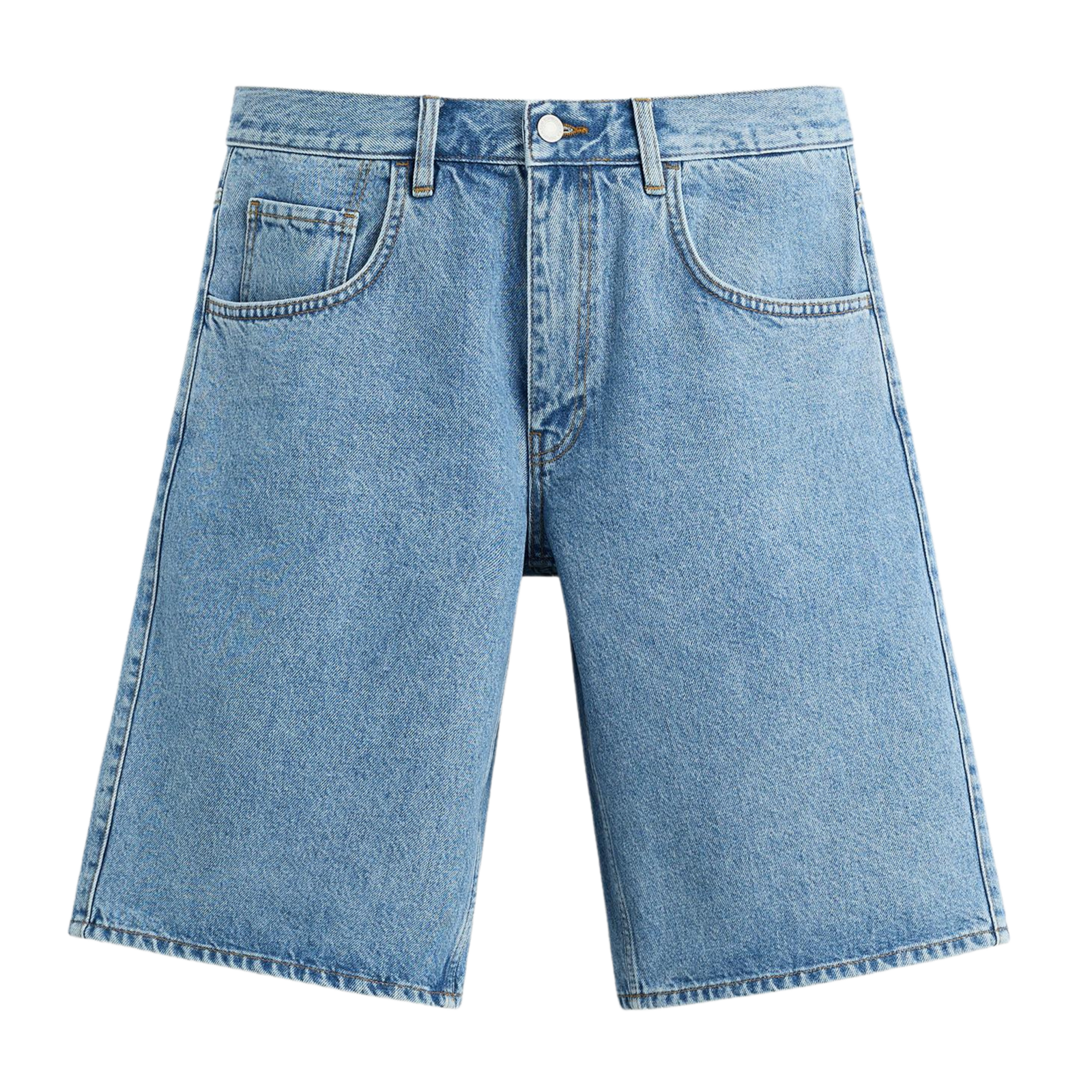
The same factories that produce for houses like Celine and Balenciaga can produce this piece, directly to you
GABI
Online now
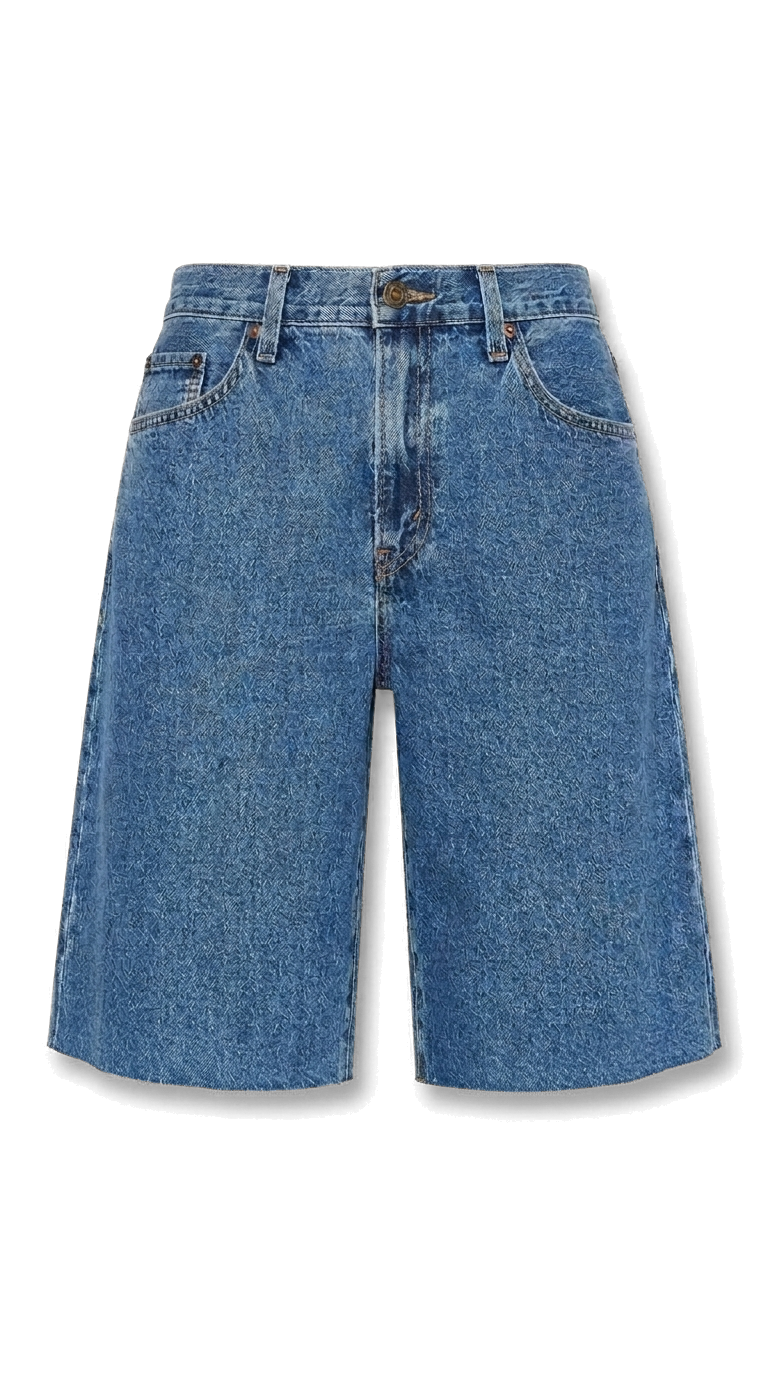
Denim Jorts
The same factories that produce for houses like Celine and Balenciaga can produce this piece, directly to you
GABI
Online now
Denim Jorts
The jort has had more cultural lives than any garment should. Working man's cut-off in the 1970s. Beach kid staple in the 1990s. Y2K punchline in the 2000s. Then — somehow — high fashion in 2015, and now a $250 item at luxury retail. The denim short keeps getting written off. It keeps coming back. Maybe it was never really gone.
The Story of Denim Shorts — "The Cut-Off That Would Not Die"
Nobody designed denim shorts. They happened. In the post-war American South and West, denim jeans wore out from the bottom — the hem frayed, the knee tore, the lower leg became unwearable. The practical solution was a pair of scissors. Cut above the damage. Keep wearing. The first denim shorts were not a product. They were a repair.
By the 1970s, cut-off shorts had become a summer wardrobe staple across America — worn by farmers, labourers, teenagers, and eventually the music festivals that were defining the cultural moment. Daisy Dukes — named after the character from The Dukes of Hazzard — codified the very short denim short as a fashion object in their own right. Short enough to be a statement. Made from the same jeans that had been worn and faded and lived in.
Denim shorts cost between $24 and $50 per unit landed. An affordable five-pocket denim short from China with stone wash lands at approximately $24. A premium GOTS organic vintage-wash short from Turkey lands at around $45. Denim shorts are the lowest landed cost item in the denim family due to their lower fabric consumption (1.00m) and simpler construction than jeans.
Midweight denim at 10–12 oz (320–410 GSM) is the standard for denim shorts — it provides the structural integrity and fade potential expected by the market while being comfortable in warm weather. Lightweight (6–9 oz) is appropriate for fashion and summer-specific shorts where drape is prioritised. Heavyweight (13–15 oz) is rarely used for shorts except for workwear-adjacent positioning.
The mid-length inseam (5–6 inches) is the most commercially versatile for denim shorts, working across gender presentations and sitting at the intersection of streetwear and casual wear. Short (3–4 inch) is strongest in women's fashion. Bermuda (7–10 inch) suits smart casual and resort. Micro (1–2 inch) is high-fashion and seasonal. Always specify inseam length precisely in the tech pack.
The 1980s brought manufactured cut-offs — factory-produced shorts that replicated the distressed, frayed aesthetic of the original hand-cut version. The authenticity of the cut-off was now available at scale. The irony was, as ever, lost on the market.
In the 1990s, the denim short lengthened. Hip-hop culture favoured the long baggy short — knee-length, oversized, worn low. The Bermuda length entered the mainstream. Different cultures, different bodies, different lengths — all claiming the same fabric.
The 2000s were complicated. Low-rise micro denim shorts from brands like Juicy Couture and Von Dutch defined an era, then became the cultural shorthand for that era's excess. The jort, as it came to be called, was declared dead multiple times. It refused.
By 2015, fashion had reclaimed the denim short with characteristic confidence. Vetements sent distressed shorts down the runway at three times their production cost. Gucci produced tailored Bermuda denim shorts in washed indigo. Acne Studios offered a clean, mid-length version in raw selvedge. The short that started as a repair was now a considered fashion object at every price point.
Today denim shorts are a perennial summer category with reliable commercial velocity. The silhouette continues to evolve — from micro to Bermuda, from cut-off to tailored, from distressed to raw — but the fabric stays the same. Indigo. Twill. Cotton or nettle or hemp. Cut, finished, washed, worn.
A raw cut frayed hem is produced by cutting the fabric at the specified length without folding or stitching. The fraying develops naturally with washing and wear, or can be accelerated with a light abrasion treatment at the hem line. Specify the expected fray depth range (e.g. 5–15mm from cut edge) in the tech pack and include a QC check on fray consistency across the bulk order.
Standard factory MOQs for denim shorts are 300 to 1,000 units in China and 200 to 500 in Turkey. Through the Sparkit network MOQs start at 50 to 150 units. Denim shorts often share cutting runs with denim jeans at the same factory, which can help negotiate lower MOQs when ordering both styles simultaneously.
Denim shorts take 40 to 97 days from order to UK delivery. China is 67 to 97 days with sea freight. Turkey is 40 to 62 days. Portugal is 38 to 65 days. Shorts are slightly faster to produce than jeans because of shorter seam lengths and simpler construction, though they use the same wash house processes and timeline.
Yes — and this is recommended for first drops. Denim shorts and jeans use the same fabric, the same wash house, and the same basic five-pocket construction. A combined order reduces per-unit sampling costs, allows shared fabric yardage purchasing, and often helps negotiate lower MOQs on both styles. Always confirm that the factory has short pattern blocks ready.
Cut-off shorts are produced by cutting a finished pair of jeans above the knee — the authenticity of an existing garment's wash and wear is preserved. Manufactured shorts are produced from flat fabric using a short-specific pattern — the wash and distressing are created in the factory. Cut-offs require a base pair of jeans plus the cut and finish treatment. Manufactured shorts use standard denim-short pricing.
Prevent indigo transfer by specifying a dye fixation rinse after any wash treatment and requesting an ISO 105 colour fastness test on bulk samples. Indigo dye in denim is not chemically bonded to the yarn — it sits on the surface — which means it will transfer to other fabrics and skin, especially in the first few washes. This is especially important for shorts worn against bare skin.
A diamond crotch gusset is recommended for baggy and relaxed fit denim shorts where range of motion is important — it distributes stress at the crotch point and significantly reduces the risk of seam failure. It adds approximately $0.50–$0.80 to CMT. For slim and tailored styles the standard crotch seam is appropriate.
Yes — nettle denim works well for shorts. The lower fabric consumption (1.00m vs 1.50m for jeans) makes the per-unit cost premium smaller. A nettle denim short landed at approximately $27 is highly credible at $100–$120 retail with a zero-water agricultural story.
CMT stands for Cut, Make, and Trim — the core labour cost. For standard five-pocket denim shorts, CMT is approximately 20–25% lower than equivalent jeans due to shorter seam lengths and simpler hem construction.