Discover with
Encyclopedia
Explore an extensive collection of garments curated by the community, featuring tailored filters and distinctive viewpoints.
Discover with
Encyclopedia
Explore an extensive collection of garments curated by the community, featuring tailored filters and distinctive viewpoints.

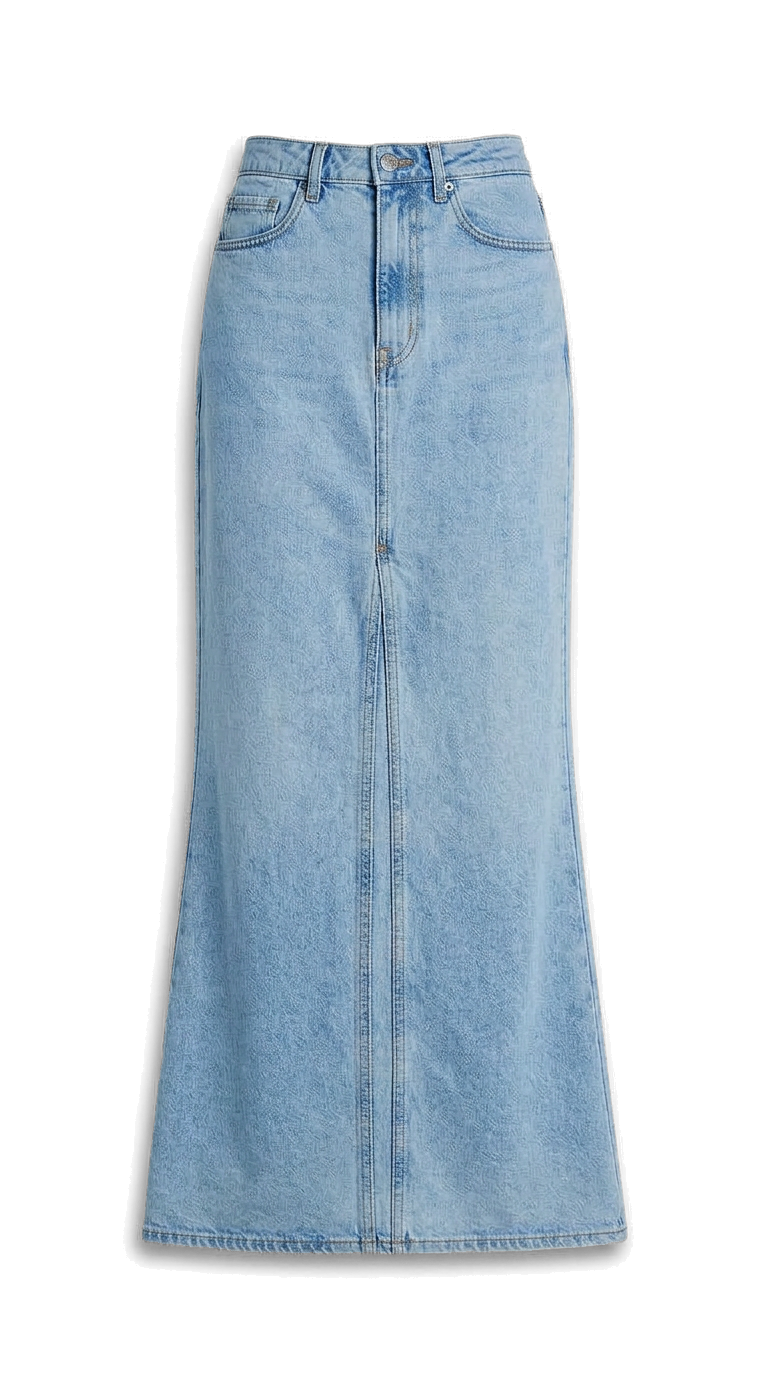
The same factories that produce for houses like Celine and Balenciaga can produce this piece, directly to you
GABI
Online now
Denim Maxi Skrits
The same factories that produce for houses like Celine and Balenciaga can produce this piece, directly to you
GABI
Online now
Denim Maxi Skrits
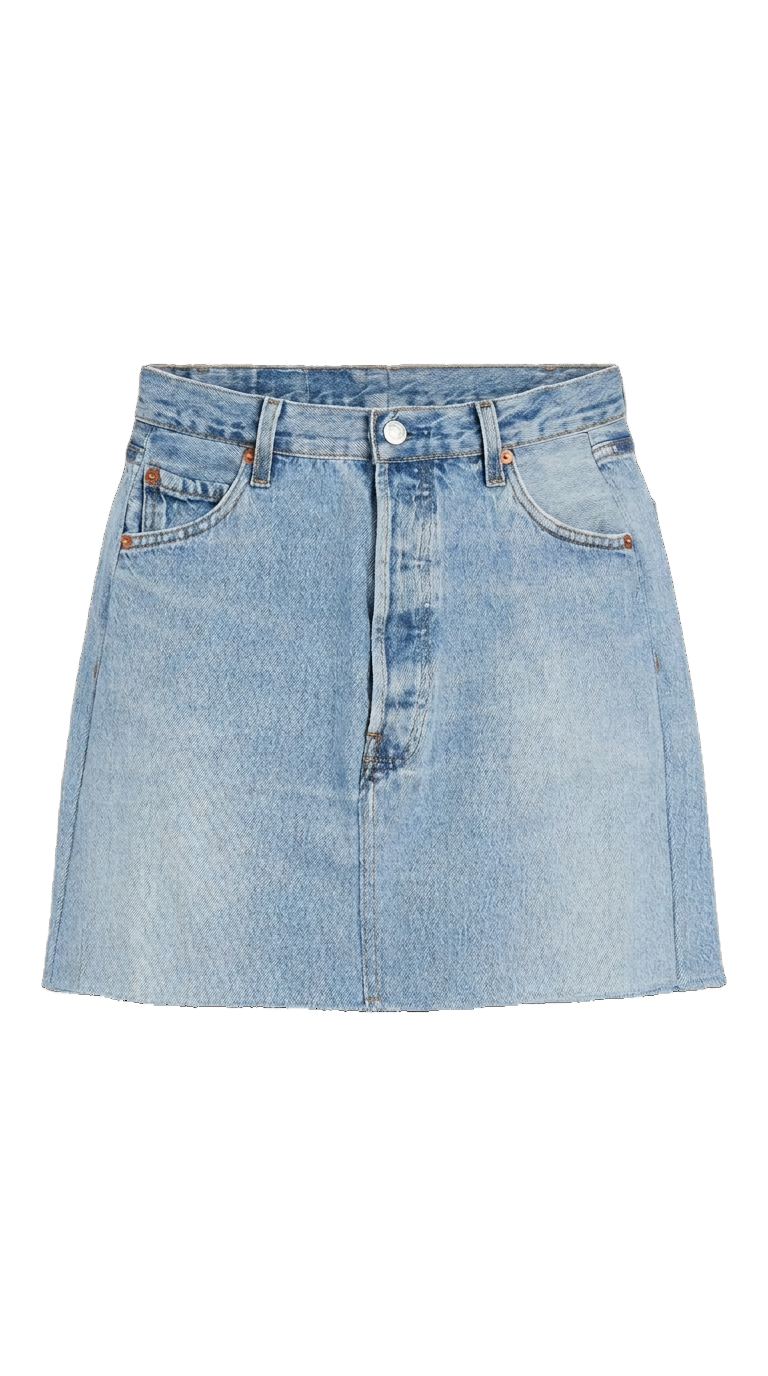
The denim skirt has been cancelled three times and come back four. Mini in the 70s. Midi in the 90s. Maxi in the 2010s. All three at once in 2023. It is the most resilient silhouette in fashion — because it takes the most democratic fabric on earth and makes it feminine, formal, and entirely its own.
The Story of the Denim Skirt — "The Most Resilient Silhouette in Fashion"
The denim skirt was not invented. It was adapted. By the 1970s, denim had colonised the American wardrobe from the waist down. Jeans were ubiquitous. The natural next move was to apply the same fabric — the same indigo twill, the same copper-riveted construction logic — to the other dominant bottom silhouette of the era: the skirt.
The early denim skirts were converted jeans — seams opened, fabric inserted, hemlines adjusted. Later they were purpose-cut from flat denim yardage, often with a front button placket that echoed the jean fly and waistband construction that created continuity across the wardrobe.
A denim skirt costs between $22 and $40 per unit landed. An affordable midi A-line in midweight denim from China with stone wash lands at approximately $22. A premium GOTS organic version from Turkey with enzyme wash lands at around $35. Denim skirts are the lowest landed cost item in the denim family after shorts, due to their smaller fabric consumption and simpler construction than jeans.
Midweight denim at 10–12 oz (320–410 GSM) is the standard for most skirt constructions — A-line, pencil, and midi styles all work best with midweight fabric that holds its shape while draping cleanly. Lightweight denim at 6–9 oz is preferred for maxi and wrap skirts where drape is the primary requirement. Heavyweight denim is rarely appropriate for skirts.
Midi-length denim skirts hitting at or below the knee are the most commercially versatile and have the broadest demographic appeal. Mini skirts have the highest fashion credibility and highest sell-through in fashion-forward womenswear. Maxi skirts are seasonal but deliver strong full-price sell-through in resort and bohemian-positioned collections. The choice should be driven by brand positioning, not trend alone.
The mini denim skirt defined the decade that followed. Short, fitted, worn with everything from band T-shirts to blazers. It was rebellious in the way that denim had always been rebellious — not through explicit political statement but through an insistence on comfort, on informality, and on refusing to be confined to a designated category.
The 1990s brought the midi. As hemlines dropped across fashion in a general move toward covered, layered, 1970s-referencing styles, the denim skirt followed. Midi-length denim skirts — hitting at or below the knee — appeared alongside plaid and grunge and the general aesthetic of the decade's discomfort with conspicuous dressing.
The 2000s were difficult for the denim skirt, as they were for most garments worn by women who were supposed to be taken seriously. Low-rise, micro, rhinestudded — the denim skirt was caught in the decade's particular brand of hyper-feminine excess. By 2010 it needed a rest.
It took fashion about five years to remember why the denim skirt worked. By 2015, the midi was back. Clean, high-waisted, dark-wash. Céline was wearing it. Street style was wearing it. The denim skirt had been laundered of its 2000s associations and returned to what it had always been: a practical, versatile, genuinely beautiful garment made from the most democratic fabric in history.
By 2023, all three lengths were in fashion simultaneously — a rare event that suggests the denim skirt has finally transcended trend cyclicality and entered the permanent wardrobe. Mini for going out. Midi for everything else. Maxi for the women who want drama without effort.
The construction remains simple relative to jeans. Fewer panels. No inseam. No fly usually. The waistband and hem are the primary quality signals. The wash carries the aesthetic weight. The denim skirt belongs to everyone. It always has. It is waiting to be built well.
MOQs for denim skirts are 300 to 1,000 units at standard factories. Through the Sparkit network they start at 50 to 150 units. Skirts can often be combined on a cutting run with shorts or jeans at the same factory, reducing per-unit sampling costs and helping negotiate lower MOQs on all styles simultaneously.
A lining is recommended for midi and maxi styles — it prevents the skirt from clinging to tights or skin, improves drape, and signals a quality finish on the interior. Specify viscose or cupro lining rather than polyester, because polyester creates static. Mini skirts do not typically require lining.
Enzyme wash is particularly well-suited to denim skirts — it softens the fabric and reduces stiffness without heavy fading, which suits the cleaner and more refined aesthetic of midi and tailored skirt styles. Stone wash is appropriate for more casual silhouettes. Raw or dark-wash skirts suit premium and fashion-forward positioning.
Denim skirts take 38 to 97 days from order to UK delivery. Portugal is 38 to 65 days. Turkey is 40 to 62 days. China is 67 to 97 days. Skirts are faster to produce than jeans due to fewer panels and simpler construction, though they use the same wash-house process and timeline.
The zip depends on silhouette. A-line and casual midi styles suit a standard metal zip at the front, echoing jeans construction. Pencil and tailored midi styles suit an invisible zip at the side or back for a cleaner front panel. Always specify a hand-stitch finish at the zip end to prevent gaping — the most common zip failure mode on skirts.
Yes, and this is strongly recommended. Denim skirts and jeans share the same fabric, the same wash house, and similar waistband construction. A combined order reduces per-unit costs across both styles and often allows a combined fabric purchase at better yardage pricing.
Luxury denim skirts use selvedge denim from Japanese or Italian mills, a raw or very light rinse wash to preserve indigo, an invisible zip with hand-stitch finish, full viscose or cupro lining, and clean construction throughout with no exposed serging on the interior. The main quality signal is the interior finish.
CMT stands for Cut, Make, and Trim — the core labour cost. For a standard denim skirt the Sparkit Engine locks CMT at $7.00 affordable, $10.00 premium, and $18.50 luxury. This is approximately 25% lower than equivalent jeans CMT due to the absence of inseam, reduced fly complexity in some styles, and simpler hem construction.
Denim skirts use HS code 6204 for womens woven skirts and divided skirts. The UK import duty rate is approximately 12% on CIF value. If the skirt is gender-neutral in design and labelling, confirm classification with your customs broker before production.